

Neuroinformatics
CS-GY 9223 / CS-UY 3943
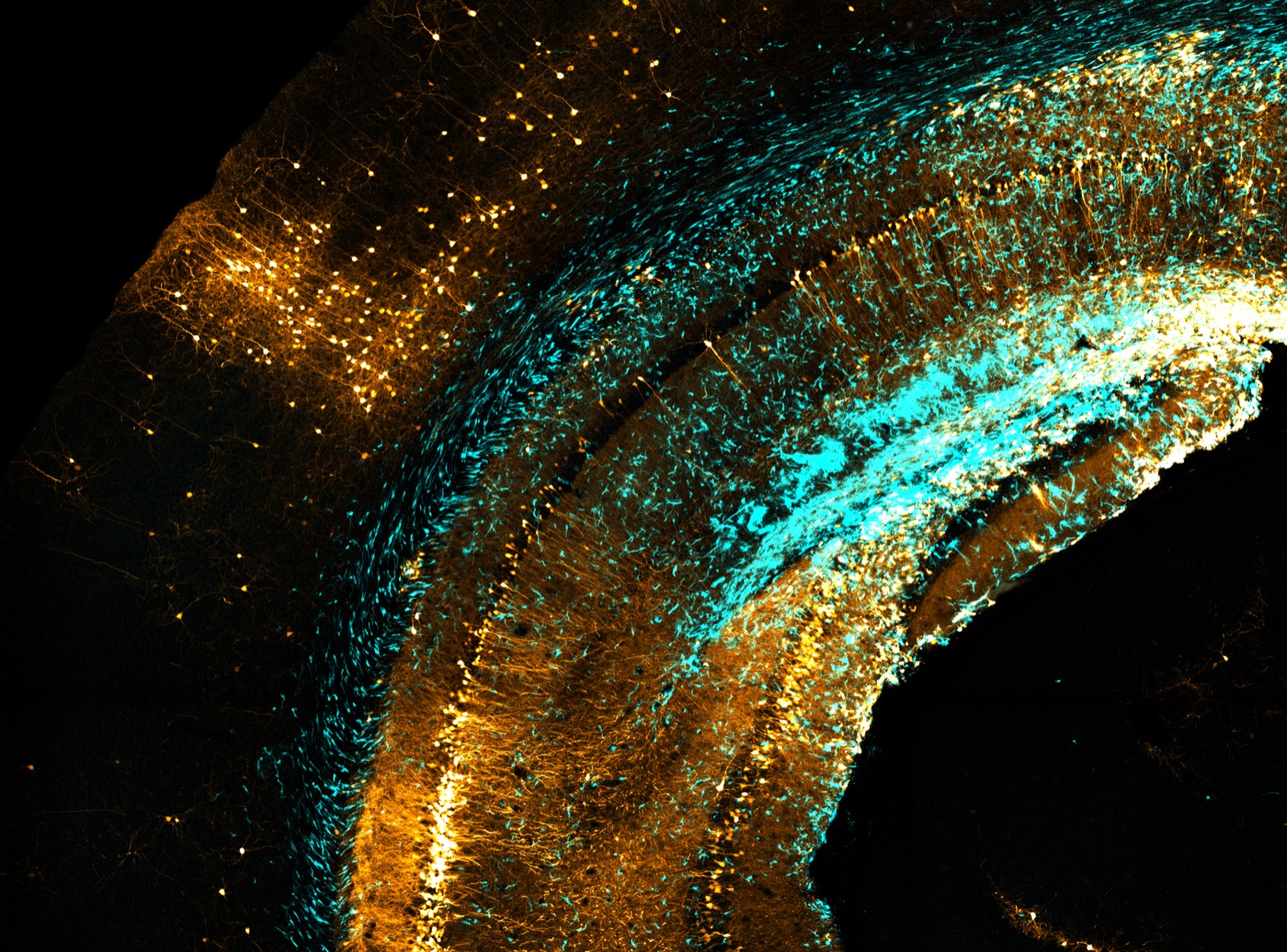
This is a Ph.D.-level topics course covering topics on modeling, signal processing as well as database management of neuroscience data.
Students from statistics, neuroscience, and engineering are all welcome to attend. Neuroscience background is not required but self-motivated interest in neuroscience is highly recommended.
Advanced undergraduates may enroll upon permission from instructor.
Course information
- Time
- Tuesdays 2pm-4:30pm
- Place
- 2 MetroTech Center Room 817
- Instructor
- Prof. Erdem Varol
- ev2240@nyu.edu
- Office hours
- 15 min appointments: Zoom Appointments
- Syllabus
Course team




Course details
Course goal
We will introduce a number of advanced machine learning and computer vision tools relevant in neuroscience. Each technique will be illustrated via application to problems in neuroscience. We will cover topics including 1) computational models of the nervous system function and structure across several species, 2) development of computer vision and signal processing tools for analyzing neuroscience data and 3) tools and databases for management and sharing of large scale neural data.
Prerequisites
A good working knowledge of basic statistical concepts such as likelihood, Bayes' rule, Gaussian random vectors and linear-algebraic concepts such as regression and principal components analysis. Coding experience in Python, Matlab and/or R is necessary for course projects.
Evaluation
Final grades will be based on class participation and journal club presentations (20%), as well as performance on 4 neuroinformatics-based Kaggle competitions (80%).
Schedule
| Date | Topic | Materials | Assignments |
|---|---|---|---|
| January 20, 2026 | Intro and survey of topics | Lecture 1 | |
| January 27, 2026 | Neuroimaging (Technologies) | Lecture 2, Colab 2 | |
| February 3, 2026 | Neuroimaging (Analysis pipelines) | Lecture 3, Colab 3 | |
| February 10, 2026 | Machine learning for Neuroimaging | Lecture 4, Colab 4 | |
| February 17, 2026 | LEGISLATIVE DAY (No Class) | Project 1 Phase 1 Due | |
| February 24, 2026 | Electrophysiology | Lecture 5, Colab 5 | Project 1 Phase 2 Due |
| March 3, 2026 | Spike localization and drift correction | Lecture 6, Colab 6 | Project 1 Phase 2 Due |
| March 10, 2026 | Electrophysiology Foundation Models | Lecture 7, Colab 7 | Project 2 Phase 1 Due |
| March 17, 2026 | Spring Break | ||
| March 24, 2026 | Neural Decoding | Lecture 8, Colab 8 | |
| March 31, 2026 | Spiking Neural Networks/Spiking Models | Lecture 9, Colab 9 | Project 2 Phase 2 Due |
| April 7, 2026 | Microscopy and Transcriptomics: Theoretical | Lecture 10, Colab 9 (SNNs) | |
| April 14, 2026 | Guest Lecture: Prof. Robert Kreuger, Biomedical Data Visualization | Lecture 11, Colab 10/11, Lecture for InfoViz | |
| April 21, 2026 | Microscopy and Transcriptomics: Data Collection and Preprocessing | Lecture 12, Colab 12 | |
| April 28, 2026 | Microscopy and Transcriptomics: Modelling | Lecture 13, Colab 13 | |
| May 5, 2026 | Guest Lecture: Junhao (Hao) Wen | Awards and Logistics, Guest Lecture |
Essential reads
Textbooks
- Dayan, P., & Abbott, L. F. (2005). Theoretical neuroscience: computational and mathematical modeling of neural systems. MIT press.
- Gerstner, W., Kistler, W. M., Naud, R., & Paninski, L. (2014). Neuronal dynamics: From single neurons to networks and models of cognition. Cambridge University Press. [link]
- Bassett, D. S., & Sporns, O. (2017). Network neuroscience. Nature neuroscience, 20(3), 353-364.
Papers
- Horikawa, T., Tamaki, M., Miyawaki, Y., & Kamitani, Y. (2013). Neural decoding of visual imagery during sleep. Science, 340(6132), 639-642.
- Kriegeskorte, N., Mur, M., & Bandettini, P. A. (2008). Representational similarity analysis-connecting the branches of systems neuroscience. Frontiers in systems neuroscience, 4.
- Pachitariu, M., Steinmetz, N. A., Kadir, S. N., Carandini, M., & Harris, K. D. (2016). Fast and accurate spike sorting of high-channel count probes with KiloSort. Advances in neural information processing systems, 29.
- Pnevmatikakis, E. A., Soudry, D., Gao, Y., Machado, T. A., Merel, J., Pfau, D., ... & Paninski, L. (2016). Simultaneous denoising, deconvolution, and demixing of calcium imaging data. Neuron, 89(2), 285-299.
- Gabitto, M. I., Pakman, A., Bikoff, J. B., Abbott, L. F., Jessell, T. M., & Paninski, L. (2016). Bayesian sparse regression analysis documents the diversity of spinal inhibitory interneurons. Cell, 165(1), 220-233.
- Rao, A., Barkley, D., França, G. S., & Yanai, I. (2021). Exploring tissue architecture using spatial transcriptomics. Nature, 596(7871), 211-220.
- Stringer, C., Wang, T., Michaelos, M., & Pachitariu, M. (2021). Cellpose: a generalist algorithm for cellular segmentation. Nature methods, 18(1), 100-106.
- Zaimi, A., Wabartha, M., Herman, V., Antonsanti, P. L., Perone, C. S., & Cohen-Adad, J. (2018). AxonDeepSeg: automatic axon and myelin segmentation from microscopy data using convolutional neural networks. Scientific reports, 8(1), 3816.
- Balakrishnan, G., Zhao, A., Sabuncu, M. R., Guttag, J., & Dalca, A. V. (2019). VoxelMorph: a learning framework for deformable medical image registration. IEEE transactions on medical imaging, 38(8), 1788-1800.
- Xu, T., Nenning, K. H., Schwartz, E., Hong, S. J., Vogelstein, J. T., Goulas, A., ... & Langs, G. (2020). Cross-species functional alignment reveals evolutionary hierarchy within the connectome. Neuroimage, 223, 117346.
- Mathis, A., Mamidanna, P., Cury, K. M., Abe, T., Murthy, V. N., Mathis, M. W., & Bethge, M. (2018). DeepLabCut: markerless pose estimation of user-defined body parts with deep learning. Nature neuroscience, 21(9), 1281-1289.
- Biderman, D., Whiteway, M. R., Hurwitz, C., Greenspan, N., Lee, R. S., Vishnubhotla, A., ... & Paninski, L. (2023). Lightning Pose: improved animal pose estimation via semi-supervised learning, Bayesian ensembling, and cloud-native open-source tools. bioRxiv.
- Nehme, E., Weiss, L. E., Michaeli, T., & Shechtman, Y. (2018). Deep-STORM: super-resolution single-molecule microscopy by deep learning. Optica, 5(4), 458-464.
- Boussard, J., Varol, E., Lee, H. D., Dethe, N., & Paninski, L. (2021). Three-dimensional spike localization and improved motion correction for Neuropixels recordings. Advances in Neural Information Processing Systems, 34, 22095-22105.
- Glaser, J. I., Benjamin, A. S., Chowdhury, R. H., Perich, M. G., Miller, L. E., & Kording, K. P. (2020). Machine learning for neural decoding. Eneuro, 7(4).
- Pandarinath, C., O’Shea, D. J., Collins, J., Jozefowicz, R., Stavisky, S. D., Kao, J. C., ... & Sussillo, D. (2018). Inferring single-trial neural population dynamics using sequential auto-encoders. Nature methods, 15(10), 805-815.
- Lawhern, V. J., Solon, A. J., Waytowich, N. R., Gordon, S. M., Hung, C. P., & Lance, B. J. (2018). EEGNet: a compact convolutional neural network for EEG-based brain–computer interfaces. Journal of neural engineering, 15(5), 056013.
- Kovács, I. A., Barabási, D. L., & Barabási, A. L. (2020). Uncovering the genetic blueprint of the C. elegans nervous system. Proceedings of the National Academy of Sciences, 117(52), 33570-33577.
- Hu, T., Leonardo, A., & Chklovskii, D. (2009). Reconstruction of sparse circuits using multi-neuronal excitation (RESCUME). Advances in Neural Information Processing Systems, 22.
- Mishchencko, Y., Vogelstein, J. T., & Paninski, L. (2011). A Bayesian approach for inferring neuronal connectivity from calcium fluorescent imaging data. The Annals of Applied Statistics, 1229-1261.
- Betzel, R. F., & Bassett, D. S. (2017). Multi-scale brain networks. Neuroimage, 160, 73-83.
- Yan, G., Vértes, P. E., Towlson, E. K., Chew, Y. L., Walker, D. S., Schafer, W. R., & Barabási, A. L. (2017). Network control principles predict neuron function in the Caenorhabditis elegans connectome. Nature, 550(7677), 519-523.
- Zalesky, A., Fornito, A., & Bullmore, E. T. (2010). Network-based statistic: identifying differences in brain networks. Neuroimage, 53(4), 1197-1207.
The previous versions of this course are available here: Spring 2025 and Spring 2024.